
How Do I Make Sense of Everything That's Happened to Me?
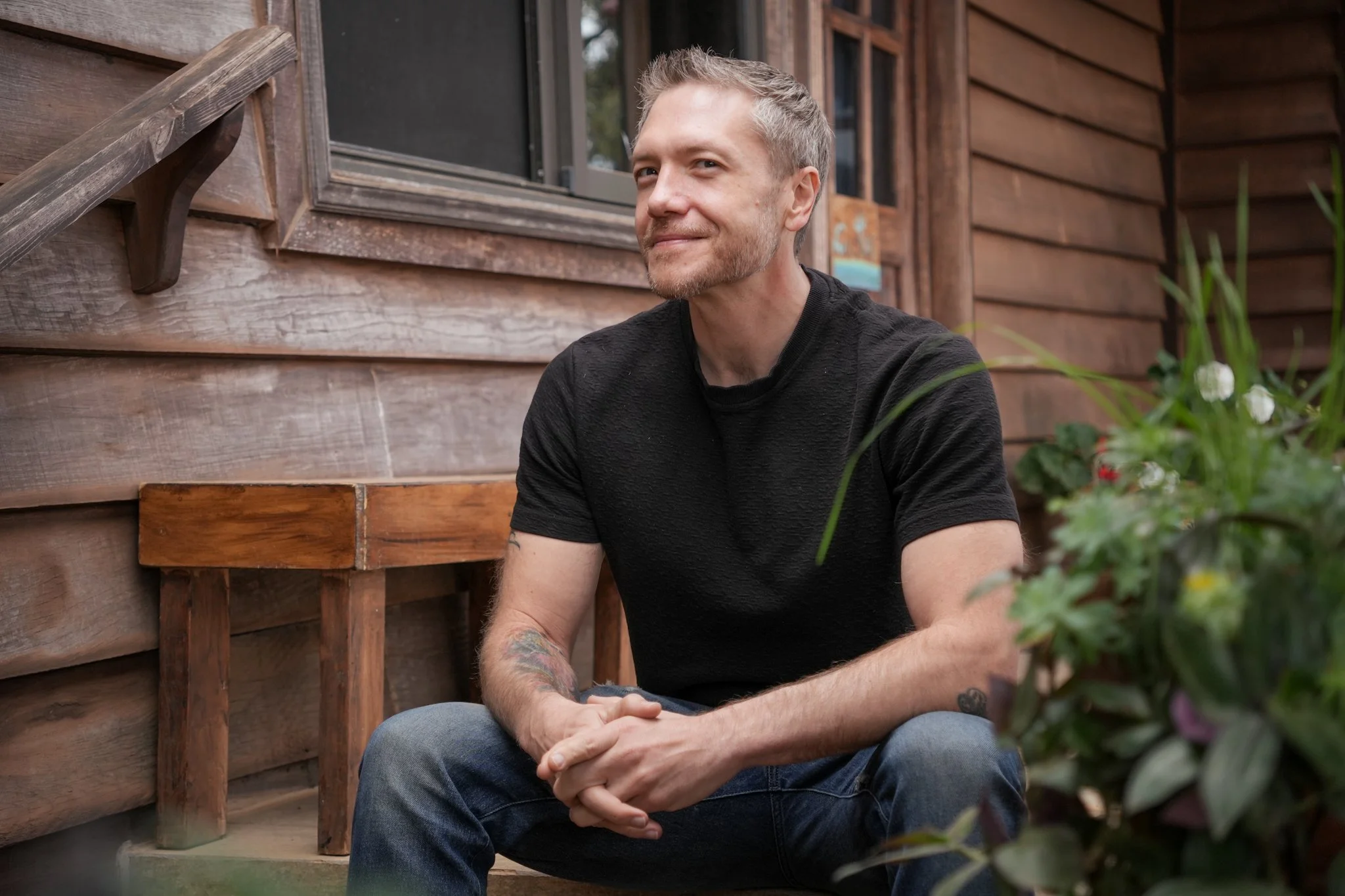
Whatever is happening is happening for you and not to you.
Finding Meaning After Trauma, Addiction, & Life's Unexpected Turns
What if some of the experiences you once wished you could erase became the experiences that helped you understand your life differently?
That question sits at the heart of my conversation with Ruger Hebert, founder of MexiSoul Retreats and host of the Remember Who You Are podcast.
Ruger's story begins in a place many people will recognize, even if the details are different.
He knew something needed to change.
He just didn't know what.
He had tried therapy, antidepressants, and different approaches to healing, yet continued to experience a profound sense of hopelessness. At one point, he describes his understanding of life simply as: you live, you suffer, and you die.
And still, some part of him kept going.
As we talked, I found myself thinking about how often this happens.
One part of us may feel exhausted, hopeless, or ready to give up while another part continues searching for something we can't quite name.
Ruger described it as a kind of higher Self—whether understood spiritually or simply as something within our internal wiring that continues guiding us.
Sometimes healing begins there.
Not with an answer.
But with the quiet sense that there must be another way.
When Life Doesn't Make Sense Until You Look Back
One of the most remarkable parts of Ruger's story is the series of seemingly unrelated experiences that eventually led him somewhere he never could have predicted.
Years earlier, Ruger's father experienced a psychiatric crisis and was treated by a psychiatrist we're calling Dr. Plant.
About eight years later, Ruger found himself struggling with suicidal thoughts and checked himself into a mental health facility in another part of Nevada.
The intake psychiatrist looked at Ruger's unusual name and asked about his father.
It was Dr. Plant.
The same physician who had treated his dad years earlier.
That doctor eventually connected Ruger to a therapist.
The therapist later recommended rehab.
Experiences in rehab led to a relationship.
That relationship ended up influencing a decision that brought Ruger to his first ayahuasca ceremony.
None of these moments appeared connected while they were happening.
Some were extraordinarily painful.
As Ruger said when I reflected on how many experiences seemed to keep guiding him toward that weekend:
"Which at the time didn't feel like it. It just felt like shit."
I love the honesty of that.
Because meaning-making can become harmful when we use it to minimize suffering.
Sometimes something is painful.
Sometimes we don't understand it.
Sometimes there is no beautiful lesson waiting for us while we're living through it.
And yet, looking backward can occasionally reveal connections we simply couldn't see while we were inside the experience.
"Everything Was Perfect, and You're Experiencing It Right Now"
Ruger's first ceremony became one of those moments.
After hours of believing nothing was happening, Ruger began feeling the familiar despair that perhaps this wouldn't work for him either.
Then an interaction occurred that challenged nearly everything he believed about spirituality, consciousness, and the nature of his own experience.
Ruger describes the moment as though the walls of his mind "broke wide open."
Suddenly, the seemingly disconnected events of his life appeared to form a larger story:
His father's crisis.
Dr. Plant.
His own hospitalization.
Therapy.
Rehab.
The relationship.
The ceremony.
"Every single thing that happened happened exactly in the way it was supposed to happen."
"Everything was perfect, and you're experiencing it right now."
Whether you understand an experience like Ruger's through spirituality, psychology, synchronicity, consciousness, or something else entirely isn't really the point.
What interests me is the question underneath it:
What changes when we become curious about our lives instead of only judging them?
What If This Is Happening For Me?
Ruger doesn't pretend this perspective makes life easy.
In fact, when he retells the story, he acknowledges that there are challenges in his life right now.
But he describes finding comfort in a perspective shift:
"Whatever is happening is happening for you and not to you."
That doesn't mean painful experiences are deserved.
It doesn't mean trauma should be reframed as a gift.
And it certainly doesn't mean we need to find gratitude for everything that has happened to us.
For me, it offers something gentler:
curiosity.
What if I don't know yet what this means?
What if the chapter I'm living isn't the entire story?
What if something I understand only as pain today eventually becomes part of how I understand myself more deeply?
Breaking Generational Patterns
Later in our conversation, Ruger describes his belief that we are spiritual beings having a human experience.
He believes that, on some level, he chose this life—and that part of his purpose is breaking generational patterns of addiction and mental illness in his family.
You don't have to share that belief for the question to be meaningful.
Ruger says something I think is especially important:
"Even if you don't have any spiritual beliefs, what is [the] better way to look at it anyway? Is this a gift or a curse?"
Many of us inherit things we didn't choose.
Family patterns.
Ways of relating.
Beliefs about ourselves.
Fear.
Shame.
Ways our nervous systems learned to survive.
Perhaps we don't always get to choose what was handed to us.
But with awareness, compassion, and support, we may begin to choose what happens next.
What If Your Feelings Aren't the Enemy?
This became one of my favorite parts of our conversation.
Ruger shared how his relationship with anxiety, fear, and depression has changed.
Rather than automatically viewing them as problems to eliminate, he has begun wondering whether they might be messengers—parts of himself communicating something that needs attention.
This deeply resonates with my philosophy as a therapist.
I don't believe there is something fundamentally wrong with us.
Our internal landscape has been speaking all along.
Sometimes quietly.
Sometimes so loudly we can't ignore it.
Anxiety may be communicating.
Grief may be communicating.
Fear may be communicating.
The parts of ourselves we've spent years trying to silence may be carrying information about what we've experienced, what we needed, and what still needs our attention.
As I shared with Ruger:
"These aren't enemies."
Healing doesn't always require us to fight harder against ourselves.
Sometimes it asks us to become safe enough to listen.
"I Am Depressed" vs. "I Feel Depressed"
The words we use to describe ourselves matter.
During our conversation, we explored the subtle but powerful difference between:
I am depressed.
and
I feel depressed.
Between:
I am anxious.
and
I feel anxious.
The first can quietly become an identity.
The second creates a little space between the person and the experience.
As I explained to Ruger, that small shift reminds us that a feeling of sadness, anxiety, fear, or depression is something a human being is experiencing.
It does not define the individual.
You are more than the hardest emotion you're experiencing today.
More than a diagnosis.
More than a coping strategy.
More than the chapter of your story you happen to be living.
And sometimes that tiny bit of separation creates enough room for curiosity.
You Don't Have to Find the Answer
At the end of our conversation, I asked Ruger what he hoped listeners would take with them.
His answer feels like the perfect place to end.
He invites us to trust that our experiences may have something to teach us and to consider ourselves not only as victims of our stories, but as people capable of overcoming, transforming, and becoming the heroes of them.
But then he offers something even gentler:
"Try to have at least a curiosity of what you're experiencing and why."
"You don't have to find the answer."
I think that's important.
We don't have to turn every painful experience into a lesson.
We don't have to understand every coincidence.
We don't have to decide whether something was destiny, synchronicity, psychology, spirituality, or chance.
Sometimes we can simply wonder:
What is this here for?
What is this trying to teach me?
What does this part of me need?
And perhaps most importantly:
What becomes possible when I stop fighting long enough to listen?
Maybe healing isn't always about finding the answer.
Maybe sometimes it's about becoming curious enough to stay with the question.
Connect with Ruger
Website: mexisoulretreats.com
Instagram: https://www.instagram.com/mexisoulretreats
YouTube: www.youtube.com/@mexisoul
Podcast: Remember Who You Are
Continue Exploring
If this conversation resonated with you, you may also enjoy:
Learning to Trust Yourself After Trauma with Jennifer Chambers
Beyond Numbing with Jake Petrykowski
Intuition Doesn't Shout with Dr. Carol Talbot
Or, if you're looking for deeper connection, you're warmly invited to join our online community for deep feelers on the first Tuesday of each month.
